 SalarUyuni.cl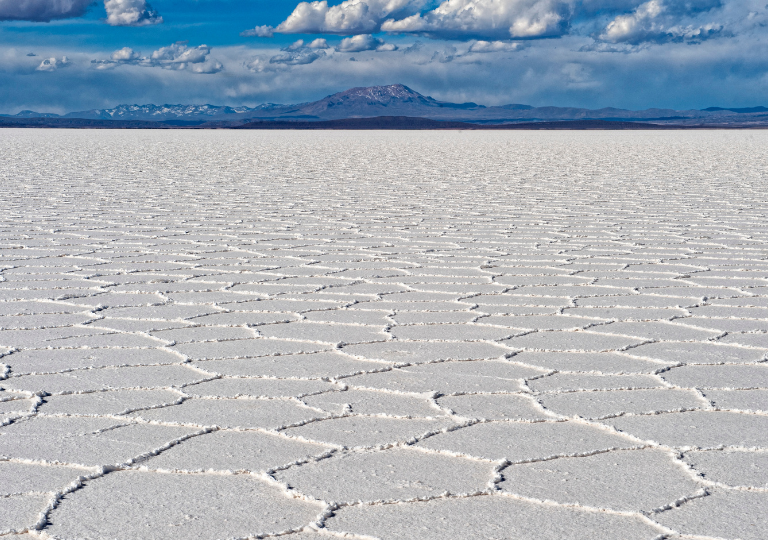
There are places that are hard to explain until you have them under your feet. The Salar de Uyuni is one of them: a salt flat so vast that the horizon stops being a line and becomes a curve. No trees, no hills nearby, no reference points. Just white, sky and a geometry of salt polygons repeating as far as you can see.
It is Bolivia's most visited attraction —it receives close to 300,000 travellers a year— and in 2019 the World Travel Awards named it South America's Leading Natural Tourist Attraction. Even so, the scale of the place swallows people up: you can be right in the middle of the salt flat and not see anyone else for several minutes of driving.
Two salt flats in one: white or mirror
The Salar changes its face depending on the month you arrive, and it is worth deciding before you buy your tickets.
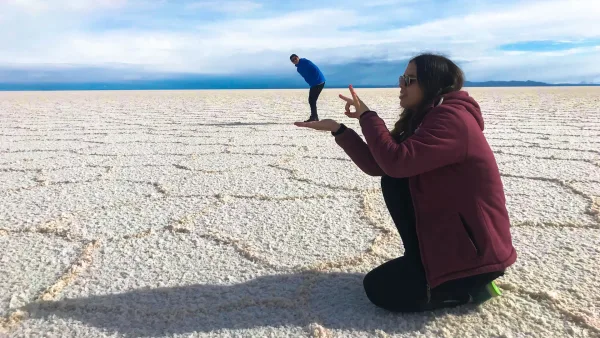
- Dry season (April to October): the salt crust is firm and hard. This is the classic white salt flat, the one with hexagonal polygons and forced-perspective photos. The 4x4s drive without restrictions and reaching Isla Incahuasi is straightforward.
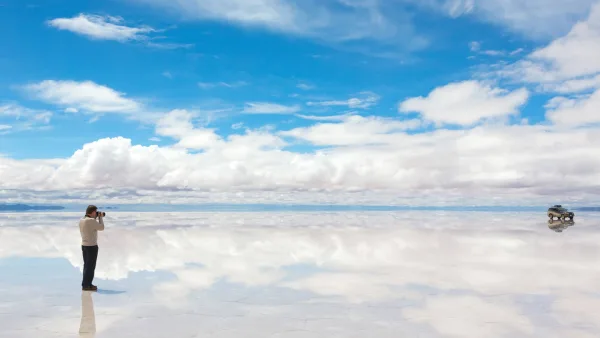
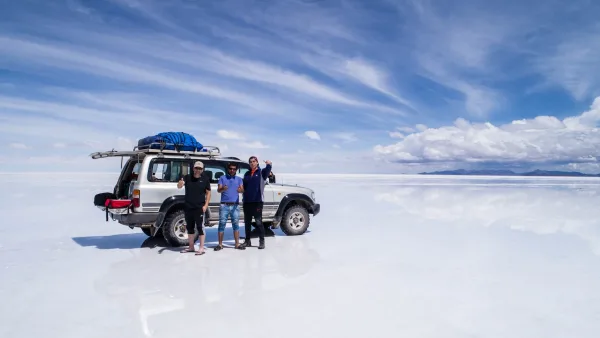
- Rainy season (November to March): a thin layer of water covers part of the surface and the mirror effect appears, with the sky reflected whole on the ground. It is the most sought-after image, but the water limits the sectors vehicles can enter and some points are left out of the route.
Neither version is better than the other. They are different experiences and, if you can, it is worth taking your time to choose which one you want to see.
Flamingos, cacti and mummies
Around November the salt flat and its lagoons become a breeding ground for three flamingo species: the Chilean flamingo, the Andean flamingo and the James's flamingo. Watching them feed against the white of the ground is one of those scenes that justifies packing a spare camera battery.
In the centre of the salt flat there are islets that were volcanic summits when all of this was a prehistoric lake. The largest of them is Isla del Pescado, covered in giant cacti that reach 10 metres in height. Isla Incahuasi, about 16 kilometres from there, is the one most circuits include: the same landscape of centuries-old cacti, with trails and a lookout point from where you can see the whole salt flat.
And in a cave at the edge of the salt flat, mummies around 3,000 years old were found. A reminder that this salt desert is not empty of human history: it has been a travel route and the territory of highland communities for millennia.
How to get there from San Pedro de Atacama
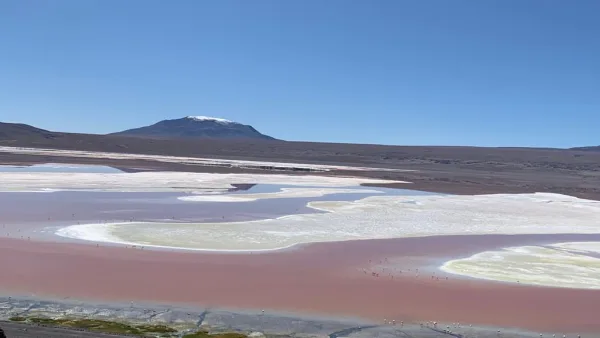
The Salar de Uyuni is not a day trip from Chile. You reach it on a 3 or 4 day journey in a shared 4x4 that leaves San Pedro de Atacama, crosses the border at Hito Cajón and travels through the Bolivian highland corridor —Laguna Verde, Laguna Colorada, the Sol de Mañana geysers, the Árbol de Piedra— before arriving at the salt flat and exiting through the city of Uyuni.
Three things worth being clear about from the start:
- Valid passport. This is an international crossing: a national ID card is not accepted. Also check the immigration requirements for your nationality.
- Sustained altitude. The salt flat sits above 3,600 metres and the rest of the route stays above 4,000. Acclimatising beforehand in San Pedro is not a loose piece of advice, it is part of the plan.
- The trip is demanding. Long days on dirt roads, nights in basic accommodation —some built from salt blocks—, sub-zero temperatures before dawn, simple food and limited electricity. The reward matches the effort, but this is a trip you walk, not one you watch through a window.
What to bring
Thermal clothing and layers for the night cold, sunglasses and strong sunscreen —the reflection off the salt multiplies the radiation—, a hat, water, some cash in bolivianos and a power bank for your camera. The cold drains the charge faster than you expect.
If you are putting your route together and want your dates to line up with the season you are after, talk to your travel consultant before booking flights. The difference between the white salt flat and the mirror effect can come down to a couple of weeks.
Map